

The Trinity River Audubon Center off of Loop 12 is an unlikely doorstep to the largest urban hardwood forest in the country — the 6,000-acre Great Trinity Forest.
One southbound turn off the freeway and into the site welcomes you into what feels like a terrain wholly separate from any urban interference.
But the “hills” you see as you look out at cyclists zooming down the AT&T trail aren’t really “hills” at all. They are called “caps,” and beneath them isn’t soil from a centuries-old seedbank. It’s landfill waste.
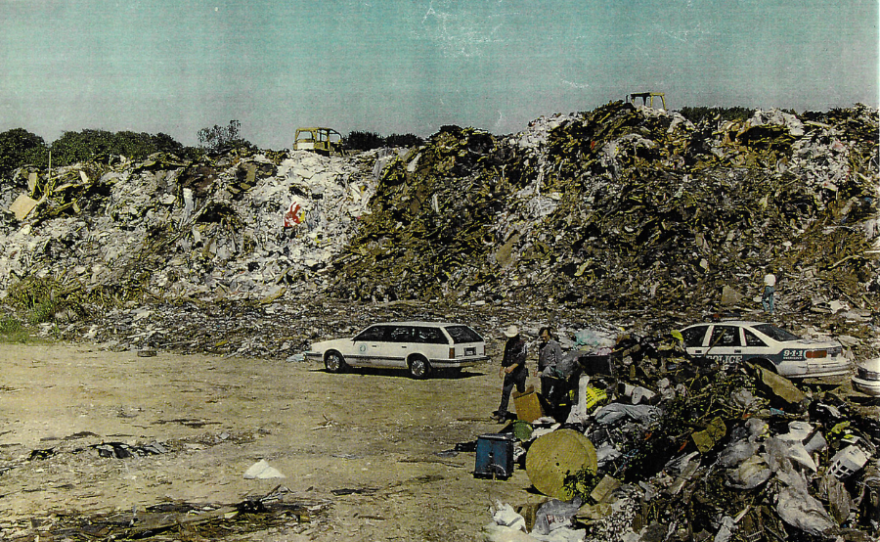
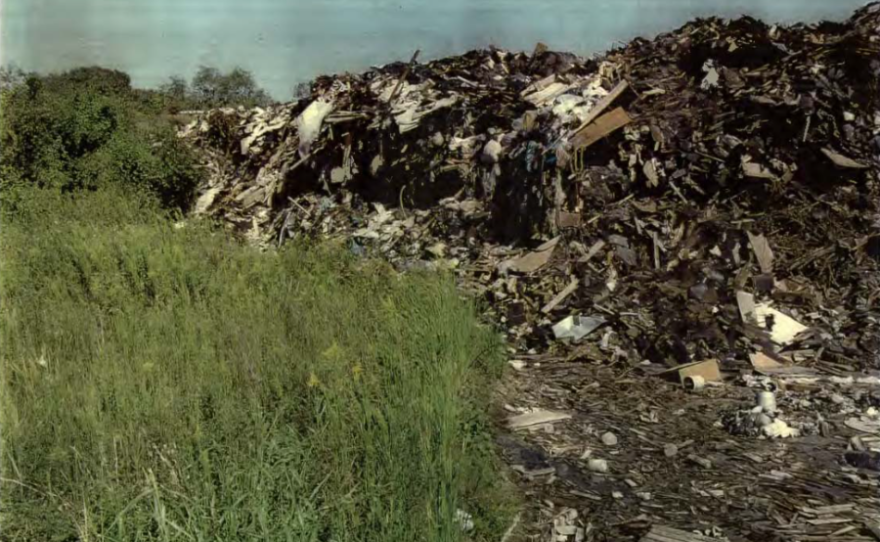
The Audubon Center sits on top of land that was once an illegal landfill known as the Deepwood dump. It sat next to a majority Black community beginning in the early 1980s and grew to be the largest illegal landfill in the Texas at the time.
The land’s reuse was enabled by capping, an approach to soil remediation where covers are placed on top of landfill waste. And, after nearly two decades of habitat restoration efforts, the Audubon Center has transformed its site from an illegal landfill into a natural oasis.
History of the Deepwood dump
As southeast Dallas transitioned from a majority white neighborhood to a majority Black neighborhood by the 1980s, the city’s code enforcement weakened, according to Laura Beshara, a civil rights attorney. She represented the homeowners living near the Deepwood dump with Michael Daniel against the city of Dallas.
“The city stopped enforcing its dumping laws,” she said. “And it issued a permit to the owner of the site to fill the site with solid waste.”
That land use permit paved the way for more than a decade of illegal dumping next to residential homes in Deepwood. Notably, the landfill included demolition debris from city contractors.
There wasn’t any monitoring of methane gas created by decomposing waste at Deepwood. That led to two fires at the dump in 1988 and 1997, which lasted several months.
“Huge amounts of locusts, animals, insects, fled the fire and into the neighborhood, into the homes,” Beshara said. “The smell was horrific. And also the neighborhood didn't know what it was they were breathing. They didn't know what had been dumped in there.”
Turning a dump into a natural oasis
After more than a decade of dumping, U.S. District Judge Harold “Barefoot” Sanders found the city and landowners liable for the Deepwood dump in 1999. He also ordered the city and landowners to clean up the site, monitor methane gas levels and turn it over to the National Audubon Society.
That decision marked the beginning of its transformation. The $37 million court-ordered and city-funded Trinity River Audubon Center ultimately opened in 2008 and exists today as a partnership between the National Audubon Society and Dallas Parks and Recreation.
“We took this place from what was an environmental hazard, the illegal dump, and made it into an environmental asset,” said Nathan May, an educator at the Audubon Center.
We took this place from what was an environmental hazard, the illegal dump, and made it into an environmental asset.Nathan May, an educator at the Trinity River Audubon Center
Restoring the land at the dump was made possible through engineering a landfill cap.
“We want to prevent things from going in, and then we also want to prevent things from coming out,” said Kathleen Smits, an SMU professor who researches environmental cleanup and remediation. That means engineering a drainage system so that water doesn’t enter the cap and create toxic runoff, and establishing a system to control methane gas emissions.
The process improves the aesthetics of the illegal dump and creates a new surface that allows for land reuse – all without having to move the waste to another site. (In the case of the Deepwood dump, that would mean the much more costly process of transporting millions of yards of cubic waste.)
Maintaining the capped waste requires collaboration between the Office of Environmental Quality and Sustainability (OEQS), Sanitation Services, and Park and Recreation with the Audubon Center.
OEQS has monitored the site’s gas collection system, methane flare and groundwater since 2006 and expects to do so for at least ten more years, the office said in a statement to KERA.
The statement also noted that methane concentrations remained below regulatory standards throughout reporting history.

In 1983, decades before the site’s transformation, May said only two species of birds were documented in the area: the ring-billed gull and the American herring gull. “Those are common sort of landfill dump birds,” he said.
Today, May said the site is home to 244 different species of birds — and is adding more each year. That’s thanks to nearly two decades of habitat restoration and droves of volunteers helping them identify birds.
While the landfill cap did set the stage for an absolute transformation of the property, the Audubon Center’s history as an illegal dump still impacts how they take care of the land.
For example, they can’t do prescribed burns because of methane gas levels. "We sort of have to make up for it a little bit," May said. "We have to go in and reset the ecosystem ourselves and remove some of the plants that are growing or getting woody if there's trees popping up."
They also aren’t working with a native seedbank from the original prairie. “We're starting from a difficult spot ecologically since we brought in new soil to put on there,” he said. “… A lot of really aggressive invasive species, things like Johnson grass, were able to come in.”

When non-native, invasive species dominate an area, the local habitat can suffer. But the Audubon Center’s restoration efforts have helped replace these invasives with native North Texas plants such as cupgrass.
That’s also helped them attract one of their most popular birds: the painted bunting. “Part of why it likes it here so much are the native plants,” May said. “It's a beautiful rainbow bird that people will drive here for hours to come see because this is the best spot in Dallas to see it.”
Illegal dumping didn't end with Deepwood
Illegal dumping in Dallas’ southern sector certainly didn’t end with the Deepwood dump’s closure.
It’s a longstanding issue along the Trinity River in areas not far from the city-operated McCommas Bluff landfill. One reason for the trend is the large pits left behind by decades of sand and gravel mining, according to Michael Daniel, who represented the homeowners living near the Deepwood dump with Beshara.
Without Judge Sanders’ ruling to fundamentally transform Deepwood’s land use, Daniel is convinced he and Beshara would still be litigating on behalf of the Deepwood neighbors. “We'd still be going out there once, twice a year, and coming back and filing motions for contempt,” he said.
Daniel and Beshara returned in 2018 to southern Dallas for another illegal dumping case. This time it was to represent residents in the nearby Floral Farms neighborhood, as ‘Shingle Mountain’ towered over their homes. That illegal dump grew to 70,000 tons of toxic waste.
“It was a sense of deja vu,” Beshara said. “We've been down this road before.”


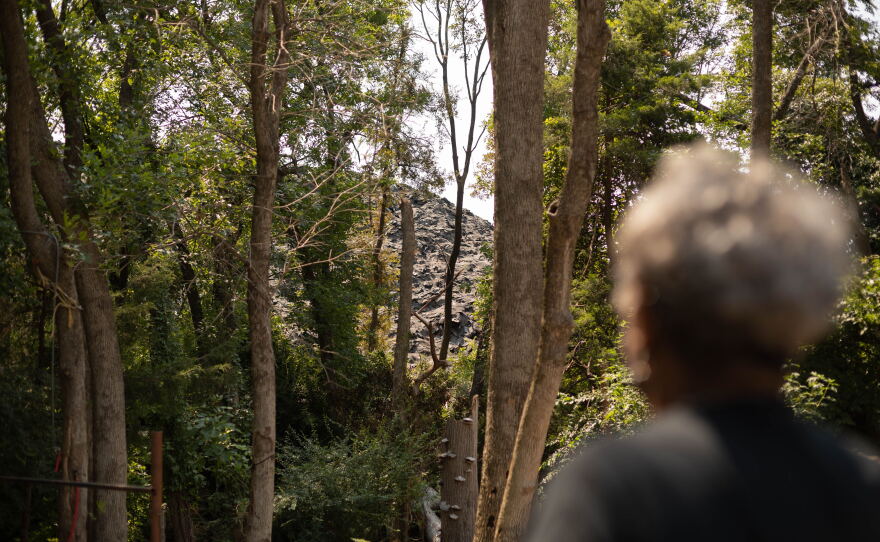
Like the Deepwood neighbors, residents living next to Shingle Mountain wanted to restore the land after the shingles were removed from the illegal dump in 2022. After a six-year fight, the former site of Shingle Mountain was rezoned in 2025 to limit industrial uses.
But they also wanted a park at the former Shingle Mountain site. “We are still pushing for that,” said Erik Wilson, who serves as a board member at the nonprofit Southern Sector Rising, a nonprofit founded in response to Shingle Mountain. He also represented southern Dallas as a city council member for district 8 from 2015 until 2017.
He said the push to the city for a park has been in “purgatory” since 2022.
Plus, earlier this year, illegal dumping along the McCommas Bluff above Trinity River left waste floating in the water and required more than 270 truckloads for removal in July.
“It's near the Trinity River Audubon Center, which is the home of the Deepwood dump, and it's not that far from Shingle Mountain,” Beshara said. “It is the prime location of where people who want to dispose of things illegally go because they know that the city is not going to enforce the laws there.”

Sharon Mixon leads the T.R. Hoover CDC in South Dallas, a neighborhood with some of the highest amounts of illegal dumping in Dallas, according to city data. The Audubon Center plays a large role in T.R. Hoover CDC’s summer programming, which includes free camps for the neighborhood children.
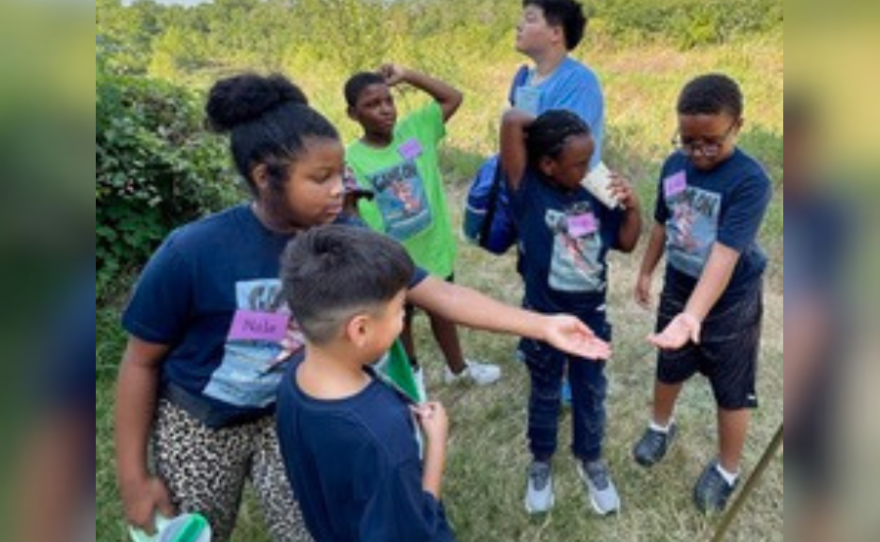
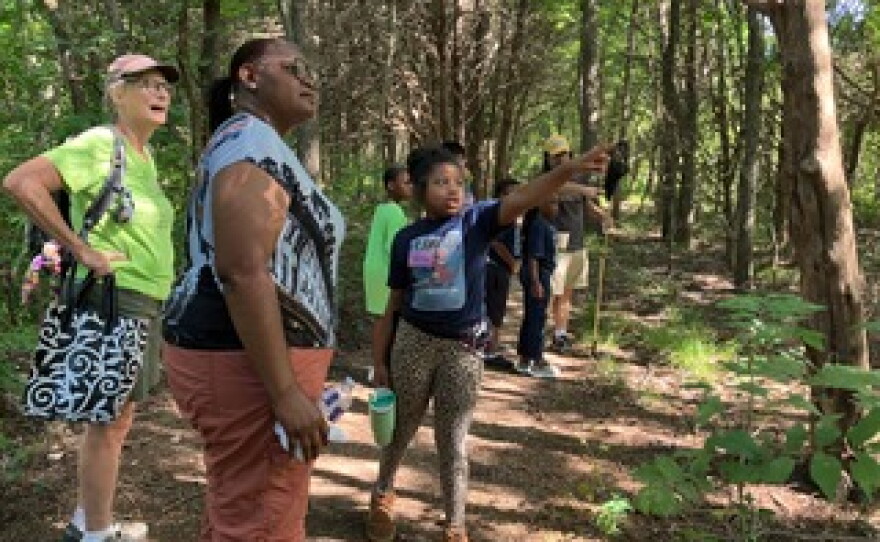
“The whole deal was getting out there and enjoying nature and connecting kids to some of the things that are in their communities,” Mixon said. “They were being shown they don't have to go outside of their community to find this. It's right here in your backyard.”
She remembers driving past the Deepwood dump as a young girl. “At that time, seeing it, you didn't really think anything about it,” Mixon said. “But then when you start hearing neighbors chattering, you then know something is wrong with that.”
Mixon hopes T.R. Hoover CDC’s summer programs will leave the kids with a love of the outdoors.
“They have to understand nature and science,” she said. “But when they see illegal dumping, they get involved now. And if we train them up that way, then we're hopeful that the future will take care of the land.”
